You'll hear it before you've left the airport: pura vida. It's on the souvenir mugs, but it's also genuinely how the country runs — a phrase, a greeting, and a way of looking at life all at once.
Costa Rica is easy to visit for the nature and miss for the culture. That's a shame, because the people are the best part. Here's what's actually underneath the slogan, and how to travel in a way that lets you meet it.
What 'pura vida' actually means
Literally it's "pure life." In practice it's the most flexible phrase in the country: hello, goodbye, thank you, you're welcome, I'm doing great, no worries, it's all good. Someone cuts you a break — pura vida. You ask how things are — pura vida.
Underneath the convenience is a real attitude: don't sweat what you can't control, value time and people over hurry and stuff, take the good that's in front of you. Lean into it and the country opens up. Fight it — get impatient when things run on tico time — and you'll have a harder trip than you need to.
The people (the Ticos)
Costa Ricans call themselves Ticos, and they're warm, easygoing, and quick to help — genuinely, not as a tourism performance. Family is the center of life, Sundays are for gathering, and there's a deep, unshowy pride in the country itself.
The pace is calmer than many visitors expect. "Tranquilo" — easy, relaxed — is half the vocabulary for a reason. A conversation matters more than a schedule. The single best thing you can do as a traveler is meet that pace rather than push against it.
A country that chose peace and nature
Two facts tell you a lot about Costa Rica. It abolished its army in 1948 and put the money into education and health instead — there's no military to this day. And it generates nearly all of its electricity from renewable sources, with a conservation ethic woven through national life: a quarter of the country is protected in parks and reserves.
This isn't trivia — it's the worldview you're traveling inside. The same values that protect the forest shape how people treat guests and the land. It's why "off the grid" here means quiet and wild, not careless.
The food
Costa Rican cooking is honest and fresh rather than fiery. Breakfast is gallo pinto — rice and beans stirred together, often with eggs and a strong coffee. Lunch is the casado: rice, beans, plantain, salad, and a protein on one plate, the everyday meal of the country. Add fruit you've never tasted, fish on the coasts, and coffee that's a point of national pride.
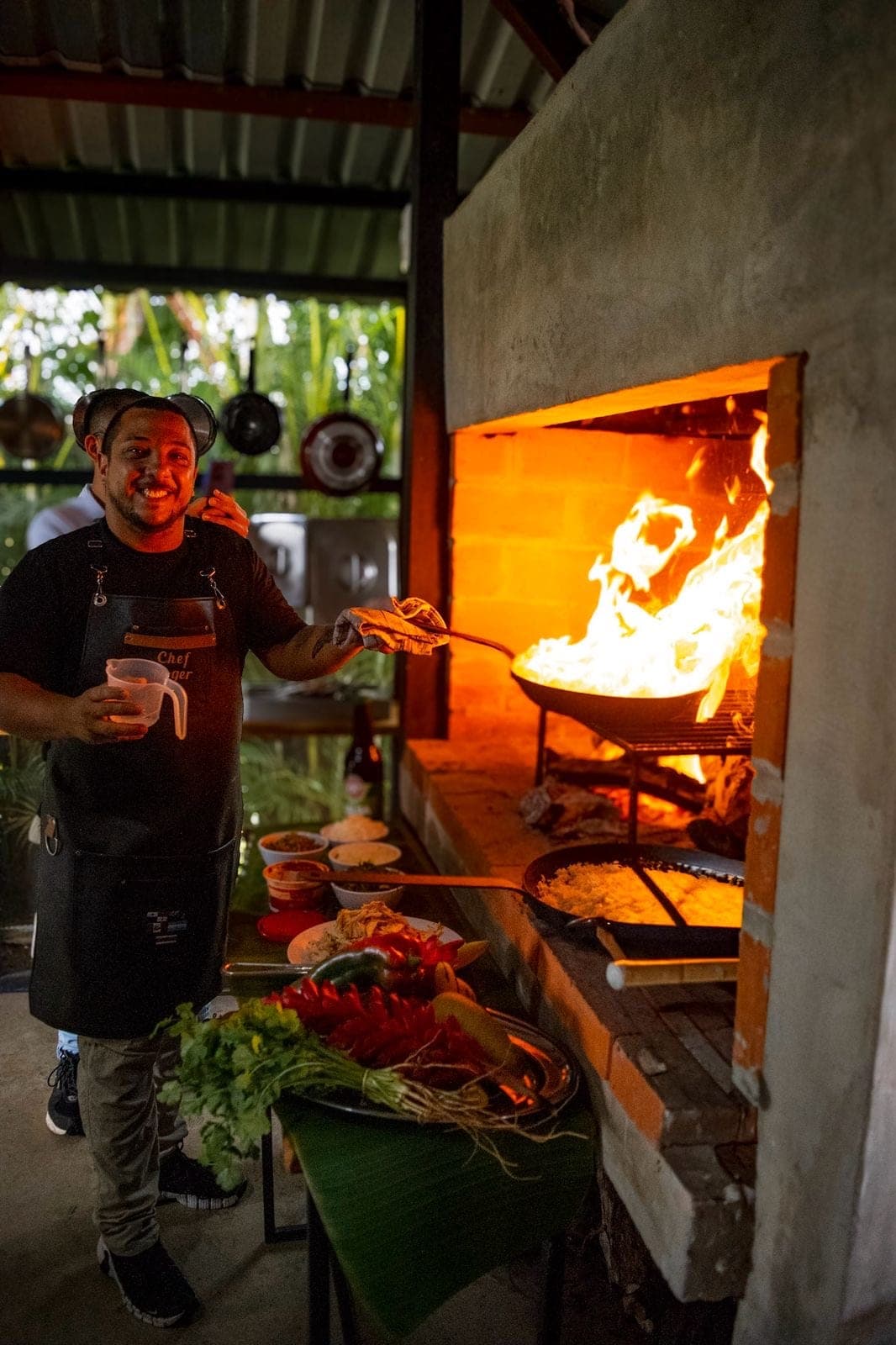
Food is also the easiest door into the culture. A cooking class at a home table, a cupping with an obsessive local roaster, a chef's table cooked in front of you — these turn eating into actually meeting people. It's the part of a trip that tends to stick.
It's not one culture — it's several
"Costa Rican culture" shifts as you cross the country, which is half the reason a multi-region trip is so rewarding.
- The Caribbean coast is Afro-Caribbean and Bribri — reggae and calypso, coconut-and-spice cooking, a different rhythm and even a different English-Creole lilt.
- Guanacaste, in the dry northwest, is sabanero country — Costa Rica's cowboy culture, with its own music, festivals and ranch traditions.
- The Central Valley around San José is the urban, coffee-growing heart, where most of the country lives.
- Indigenous communities — Bribri, Cabécar, Boruca and others — keep living traditions, especially around the Talamanca mountains and the south.
How to meet the culture, not just photograph it
Connecting isn't complicated; it mostly takes slowing down and a little effort. A few things go a long way:
- Learn a handful of Spanish words — buenas, gracias, con mucho gusto, pura vida — and use them.
- Slow down: fewer places, more time, real conversations over rushed stops.
- Eat where and what locals eat; say yes to the casado and the soda (the small family eatery).
- Spend your time with people who belong to a place — a guide, a cook, a roaster — not just at the sights.
- Travel small and respectfully; a quiet group changes a place far less than a busload.
Common questions
- What does 'pura vida' mean?
- Literally 'pure life.' Costa Ricans use it as hello, goodbye, thank you, you're welcome, and 'all good' — and as a whole philosophy of not sweating what you can't control and valuing time and people over hurry.
- Are Costa Ricans friendly to tourists?
- Very. Costa Ricans (Ticos) are warm, easygoing, and genuinely helpful, with a calm 'tranquilo' pace. Meeting that pace — and learning a few words of Spanish — goes a long way.
- What is the traditional food of Costa Rica?
- The staples are gallo pinto (rice and beans, the classic breakfast) and the casado (a lunch plate of rice, beans, plantain, salad and a protein), alongside fresh tropical fruit, coastal fish, and excellent coffee.
- Is Costa Rican culture the same across the country?
- No — it varies by region. The Caribbean coast is Afro-Caribbean and Bribri, Guanacaste has its sabanero (cowboy) traditions, the Central Valley is the urban coffee heartland, and indigenous communities keep living traditions, especially in the south.